
A lower denture usually moves because it sits on a narrow ridge of gum while your tongue, cheeks and lips push against it every time you speak or eat. Over the years, the bone underneath also shrinks, so a denture that once fitted well slowly loosens. A suction denture, shaped around the way your mouth moves, can make a lower denture far more stable. Here is why the problem happens and what can be done about it.
Why lower dentures are harder than uppers
An upper denture covers the roof of your mouth, which gives it a large surface to hold on to. A lower denture has none of that. It sits on a horseshoe shaped ridge with your tongue in the middle, and the floor of your mouth rises and falls as you swallow and talk.
That constant movement breaks the seal on many lower dentures. The result is the familiar story: a denture that lifts when you talk, tips when you bite, and needs more and more adhesive to stay in.
Signs your denture no longer fits properly
- You are using more adhesive than you used to, or it no longer helps.
- Your denture clicks, lifts or slips when you talk or laugh.
- Food keeps getting trapped underneath.
- You have sore spots or ulcers that keep coming back.
- You avoid certain foods or eating in front of other people.
- Your face looks more sunken around the mouth than it used to.
Any of these is worth getting checked. A loose denture is not something you simply have to put up with.
How a suction denture tackles the problem
The key is the edge of the denture. When we make a suction denture, we take detailed impressions while you move your lips, cheeks and tongue, so the border is shaped around how your mouth actually works rather than how it looks at rest. That border sits snugly against the soft tissue, creating a seal that helps the denture stay down when your mouth moves.
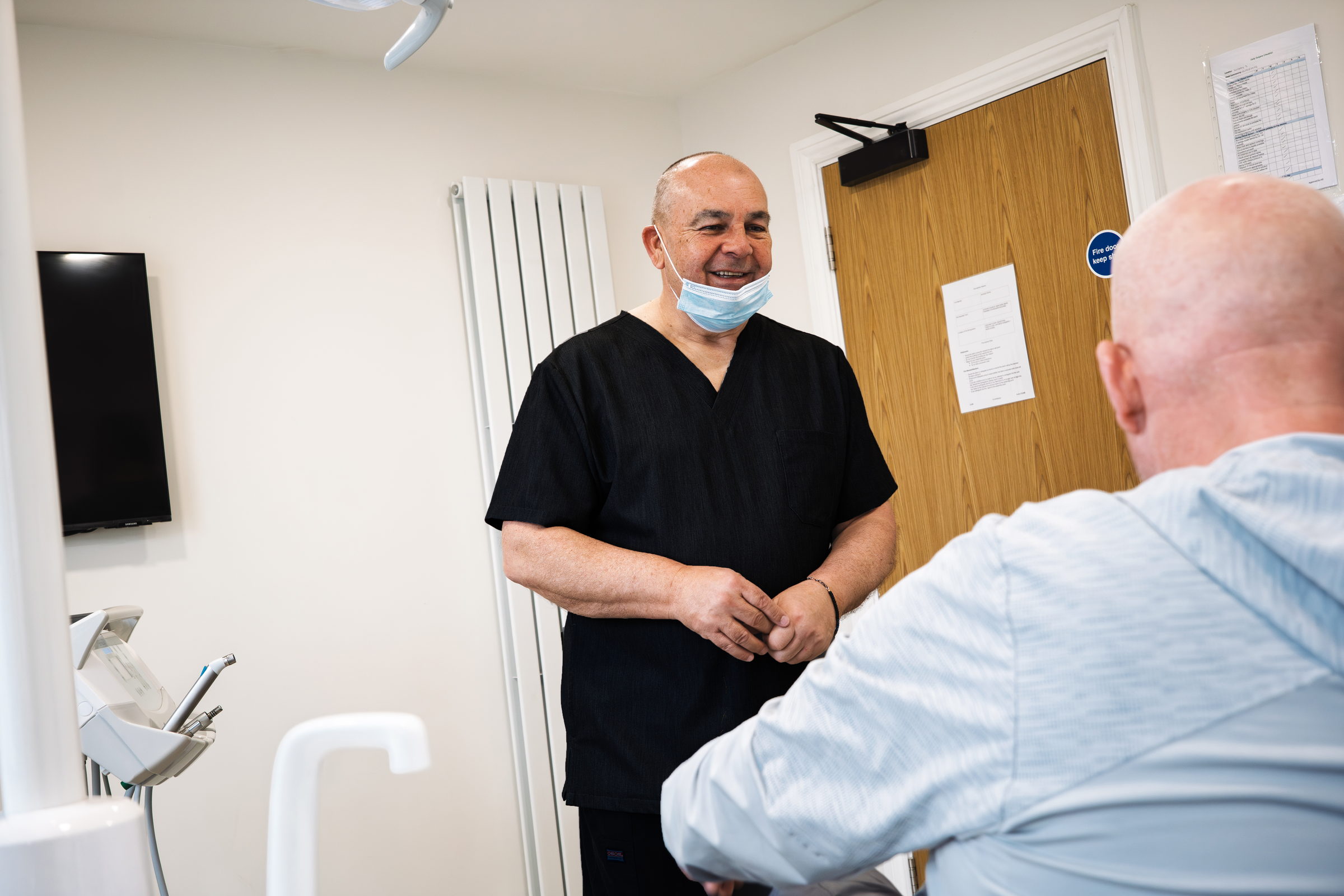
The teeth are also positioned carefully so that biting pushes the denture into place rather than tipping it. This is skilled work, and at Dream Smiles Dental it is carried out by our Clinical Dental Technician (CDT), John Wibberley, who has more than 50 years of experience making dentures.
When a suction denture is not enough
For most people, a well made suction denture is a big step forward. For some, particularly where the lower ridge has shrunk a great deal, even the best denture cannot create a strong enough seal. In that case, a small number of implants can hold the denture firmly in place. Our guide to implant-retained overdentures explains how that works. We will always tell you honestly which option suits your mouth.
What to do now
If your lower denture is loose, resist the temptation to keep adding adhesive. It can hide the problem while the fit gets worse. A consultation will show whether your denture can be adjusted, whether a new suction denture would help, or whether another option is better.
Frequently asked questions
Is it normal for a lower denture to move a little?
Some movement is normal, especially in the first few weeks. A denture that lifts, slips or needs heavy adhesive every day is a sign the fit could be better.
Will a reline fix my loose denture?
A reline adds new material to the fitting surface and can help when the gums have changed shape. If the edges or the tooth positions are the problem, a new denture is often the better answer.
Can I have a suction denture on my upper jaw too?
Yes. Suction dentures can be made for the upper jaw, the lower jaw or both. You can read more in our guide to suction dentures in Bolton.
Book a denture consultation in Bolton
If your lower denture will not stay put, let us take a look. Book your consultation online, start with a free e-consultation, or call us on 01204 964678.